
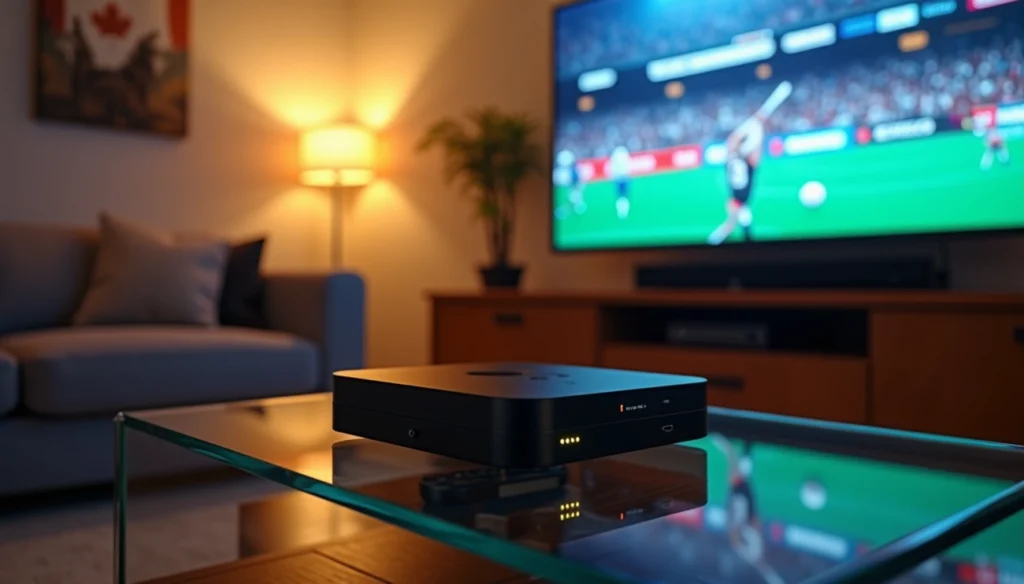
IPTV boxes have become the modern viewer’s pass to a world of live TV, movies, and sports without the inconvenience of traditional cable. Essentially, these devices serve as the middleman between your TV screen and the content host whose programs you want to view. In contrast to cumbersome cable setups, the top IPTV boxes of 2025 are streamlined, contract-free, and designed for contemporary viewers.
However, choosing the right IPTV box depends on several factors including price, storage capacity, IPTV integration, and overall performance. Throughout this guide, we’ll examine expert-tested options like the Formuler Z11 Pro Max with its built-in application specifically designed for live TV services and the Fire TV Cube with its excellent 4K streaming capability and voice assistant features. Whether you’re new to IPTV or looking to upgrade your current setup, our comprehensive reviews will help you find the best IPTV box for your Canadian home theater system.
What is an IPTV Box and How Does It Work?

Image Source: PDi Communication Systems
Internet Protocol Television (IPTV) has changed how viewers consume media across Canada. Unlike the introduction section, let’s dive deeper into what exactly an IPTV box is and how this technology works.
An IPTV box serves as the translator between your internet connection and television screen. This specialized device receives digital internet signals and converts them into a format your TV can understand and display. It acts as the critical bridge connecting your home network to your entertainment system, enabling access to a vast world of content without traditional broadcasting infrastructure.
IPTV vs traditional cable
Traditional cable television operates through a system of physical coaxial cables transmitting signals directly to your home. In comparison, IPTV works by converting television content into data packets that travel through your internet connection. This fundamental difference creates several advantages for IPTV users.
First, IPTV delivers a more personalized experience. While cable forces viewers into rigid channel packages, IPTV allows Canadians to select only the channels they actually want to watch. Additionally, many IPTV services offer superior video and audio quality, particularly for high-definition content.
The infrastructure requirements also differ dramatically. Cable TV demands extensive physical infrastructure—miles of cable and video headends for management. Meanwhile, IPTV can leverage existing internet connections, making it more cost-efficient and accessible for service providers and consumers alike.
Perhaps most importantly, IPTV breaks free from the constraints of scheduled broadcasting. Instead of being limited to what’s currently airing, viewers gain access to:
- On-demand programming
- Pause, rewind, and fast-forward capabilities for live TV
- Broader content libraries than traditional cable offerings
How IPTV boxes connect to services
The connection process begins when you select a channel through your IPTV provider. Your box or device then communicates with the provider’s server, creating a link with its IP address. This connection transmits the necessary information to display your chosen content on screen.
For optimal performance, IPTV requires a reliable, high-speed internet connection. Most services recommend internet speeds of at least 50Mbps for high-quality streaming. The IPTV box itself processes these incoming digital signals, decoding them into the video and audio you experience.
Modern IPTV boxes offer various connection options, from provider-specific devices dedicated to single services to versatile open-platform boxes supporting multiple content sources. These range from basic models to sophisticated entertainment centers with additional streaming capabilities.
Why Canadians are switching to IPTV
The shift toward IPTV in Canada has been remarkable. In 2023 alone, IPTV subscriptions accounted for 5.1 million users, and experts project it will remain the leading platform for pay-TV services through 2028.
Cost-effectiveness stands as a primary motivation for this switch. Traditional cable subscriptions often come with hidden fees and long-term contracts, while many IPTV services offer more competitive pricing with flexible subscription options. Some providers even include free trials before commitment.
Furthermore, Canadians appreciate the freedom IPTV provides. The ability to watch content across multiple devices simultaneously benefits families with different viewing preferences. The convenience of on-demand viewing, personalized recommendations, and interactive features makes the experience more enjoyable and user-centric.
The improving fixed infrastructure in Canada, alongside growing adoption of discounted multiplay packages with IPTV services, continues to fuel this transition away from traditional television delivery methods.
8 Expert-Tested IPTV Boxes for Canada

Image Source: YouTube
After exploring what IPTV technology offers, let’s examine the hardware that brings this content to your screen. Based on extensive testing and real-world performance, these eight IPTV boxes represent the best options currently available for Canadian viewers in 2025.
1. Formuler Z11 Pro Max
The Formuler Z11 Pro Max stands as a premium option for serious IPTV users. This powerhouse device runs on Android 11 with a Realtek RTD1319C processor and 4GB DDR4 RAM. Its standout feature is the built-in MyTVOnline3 application, specifically designed for IPTV streaming with intuitive channel management.
With 32GB of internal storage, you’ll have ample space for apps and games. The device supports recording, though you’ll need to use external or network storage rather than internal memory. The Z11 Pro Max includes a Bluetooth voice assistant remote, making navigation seamless.
One limitation worth noting is that while it supports side-loading apps like Kodi, it’s not licensed for high-quality Netflix content. Currently priced around CAD 292.59, it’s a higher-end investment that delivers on performance.
2. BuzzTV Gen 5
BuzzTV’s Gen 5 lineup offers excellent value starting at approximately CAD 125.39. These boxes run Android 11 and feature the integrated BuzzTV 5 app with robust IPTV capabilities. The standout features include PVR+ functionality for scheduled recordings and TimeShift, which lets you pause, rewind, and fast-forward live TV.
The E5 model includes a quad-core Amlogic processor, 2GB RAM, and 32GB storage, whereas higher-end models offer up to 128GB storage. All versions come with dual-band Wi-Fi, though premium models add Wi-Fi 6 connectivity and gigabit LAN ports for stable streaming.
BuzzTV regularly provides system updates that fix bugs and add new features, making these boxes a reliable long-term investment for IPTV enthusiasts.
3. MECOOL KM2
The MECOOL KM2 delivers impressive performance with its Amlogic S905X4 quad-core processor and 4GB RAM. Priced around CAD 110.06, this Android TV 11 device offers Netflix 4K certification, a relatively rare feature among IPTV boxes.
Video support is comprehensive with Dolby Vision and Dolby Atmos capabilities, delivering cinema-quality visuals and audio. The device supports AV1 decoding and HDR10+ processing for future-proof performance.
With 32GB of expandable eMMC storage, you’ll have plenty of room for apps from Google Play. The KM2 handles 4K content flawlessly and offers both Wi-Fi and gigabit Ethernet connectivity for reliable streaming.
4. Fire TV Cube (3rd Gen)
Amazon’s Fire TV Cube (3rd Gen) combines IPTV capabilities with smart home functionality at CAD 195.06. The 2.0GHz octa-core processor and Wi-Fi 6E support enable smooth 4K streaming with Dolby Vision and Dolby Atmos audio support.
What sets this device apart is the built-in microphone and speaker that allows hands-free Alexa control even when the TV is off. The device includes 16GB of storage and supports USB drives for expansion.
For privacy-conscious users, integrated controls include an off button to electronically disconnect the microphones. Although some IPTV apps require sideloading, the process is straightforward for most services.
5. NVIDIA Shield TV Pro
The NVIDIA Shield TV Pro represents the premium tier of IPTV boxes at approximately CAD 278.66. Powered by the NVIDIA Tegra X1+ processor with a 256-core GPU and 3GB RAM, it delivers unmatched performance for demanding applications.
Its most impressive feature is AI-enhanced upscaling, which transforms HD content to near-4K quality. With 16GB of expandable storage and dual USB 3.0 ports, you’ll have flexibility for external devices and recording options.
The Shield supports virtually every audio format imaginable and receives regular updates directly from NVIDIA. For those who want the absolute best streaming experience without buffering, even with multiple 4K streams, this device justifies its higher price tag.
6. MAG 324
The MAG 324 offers a cost-effective solution at around CAD 111.45. Unlike the Android-based options, this box runs on Linux 3.3, providing a stable, purpose-built environment for IPTV streaming.
The device uses a BCM75839 chipset with a MIPS 4KE Dual Core CPU and 1GB RAM, offering reliable performance for 1080p content. With H.265/HEVC support, you’ll enjoy efficient streaming even with limited network bandwidth.
Connection options include Ethernet, HDMI, and composite outputs, making it compatible with both newer and older television sets. The MAG 324w2 variant adds Wi-Fi connectivity for additional flexibility in your setup.
7. onn. 4K Pro
Walmart’s onn. 4K Pro represents exceptional value at just CAD 69.50. This Google TV device features a quad-core Cortex A55 processor with 3GB RAM and 32GB storage, delivering performance that rivals much more expensive options.
Standout features include the remote finder button that makes the included remote chime when lost and hands-free Google Assistant support via built-in microphones. The device supports 4K HDR with Dolby Vision and Dolby Atmos compatibility.
The onn. 4K Pro includes an Ethernet port for stable connections and a USB port for expandable storage or peripherals. For budget-conscious IPTV users, this device offers premium features at an entry-level price.
8. Xiaomi TV Box S
The Xiaomi TV Box S completes our list at approximately CAD 97.52. The 3rd generation model features a 6nm high-performance platform with a quad-core A55 CPU and supports Dolby Vision and Dolby Atmos for cinema-quality experiences.
A standout feature is Wi-Fi 6 compatibility, enabling faster internet connections when paired with a compatible router. The Google TV interface provides personalized recommendations and powerful search capabilities across apps.
The included 360° Bluetooth remote offers voice control through Google Assistant. With its sleek, pebble-like design and straightforward three-step setup process, this device combines esthetic appeal with practical functionality.
How to Choose the Best IPTV Box for Your Needs
Choosing an IPTV box that matches your specific needs requires careful consideration of several key factors. Let’s explore what makes certain devices stand out from the rest.
Performance and speed
The heart of any IPTV box lies in its processing power. Look for devices with powerful CPUs like the Amlogic S928X or Rockchip RK3588 chipsets for smooth playback. Boxes with at least 3GB RAM provide noticeably faster menu navigation and app loading times. During peak viewing hours, especially for 4K content, inadequate processing power results in frustrating buffering or frame drops.
Storage and recording options
Recording capabilities vary significantly between devices. Some boxes offer internal storage (16-128GB), sufficient for timeshift features that allow pausing and rewinding live TV. For serious recording enthusiasts, consider devices supporting external storage expansion via USB ports. Cloud DVR functionality, available on select models, stores your recordings remotely without taxing local storage.
User interface and remote control
The interface quality dramatically impacts daily usability. Modern IPTV boxes feature voice search capabilities, eliminating frustrating on-screen typing. Some remotes include customizable shortcut buttons for frequently accessed functions. As an alternative, several devices support smartphone control apps, offering swipe gestures and clipboard integration for easier text entry.
Compatibility with IPTV services
Verify that your chosen box supports your preferred IPTV service. Devices like Formuler models include dedicated IPTV applications (MyTVOnline3), making channel management intuitive. Others require third-party apps such as TiviMate or IPTV Smarters.
Price vs value
IPTV boxes range from budget-friendly (under $70) to premium ($250+) options. Consider long-term value—cheaper boxes may require replacement sooner due to performance limitations or lack of updates. Premium devices typically offer better build quality plus advanced features like AI-enhanced upscaling.
IPTV Box vs Android TV Box: What’s the Difference?
Many consumers often confuse dedicated IPTV boxes with Android TV boxes, yet understanding their distinctions helps in making smarter purchases. As we explore these differences, remember that the right choice depends on your specific entertainment needs.
Streaming capabilities
Dedicated IPTV boxes focus primarily on delivering television content through internet protocol. These devices excel at handling live TV channels with minimal latency and offer specialized features like electronic program guides tailored for IPTV services. Conversely, Android TV boxes serve as multipurpose streaming devices, supporting not just IPTV but additionally various streaming platforms through their app ecosystem.
App support and OS differences
The operating systems mark a fundamental difference between these devices. Dedicated IPTV boxes typically run proprietary or modified operating systems designed explicitly for IPTV functionality. For instance, MAG devices utilize their Linux-based Infomir OS. Android TV boxes, as the name suggests, run Google’s Android TV OS, providing access to Google Play Store with thousands of apps beyond IPTV services.
Ease of use for IPTV
Dedicated IPTV boxes offer a streamlined experience with interfaces designed specifically for channel navigation and IPTV functionality. The learning curve remains minimal with straightforward remote controls and menu systems. Android boxes require additional configuration through third-party applications like TiviMate or IPTV Smarters, making them potentially more complex for non-technical users.
Which is better for Canadian users?
For Canadians seeking simplicity and focused IPTV performance, dedicated boxes like Formuler or MAG models provide the most straightforward solution. Nevertheless, Android TV boxes offer greater versatility for those who want IPTV alongside Canadian streaming services like CBC Gem, Crave, or DAZN. Your choice ultimately depends on whether you prioritize specialized IPTV performance or prefer broader entertainment options from a single device.
Legal and Privacy Considerations in Canada
Navigating the legal landscape of IPTV technology requires understanding both hardware and content distinctions. Let me guide you through the essential considerations for Canadian viewers.
Are IPTV boxes legal in Canada?
The distinction is crucial: IPTV boxes themselves are completely legal in Canada, but how you use them matters. Licensed IPTV services that follow CRTC regulations are perfectly legitimate. In contrast, services offering hundreds of premium channels for suspiciously low prices (around CAD 13.93/month) typically operate without proper licensing.
Risks of using preloaded or jailbroken boxes
Modified IPTV devices pose serious security hazards beyond legal concerns. To run cracked apps, these boxes use modified Android versions that remove essential security measures like verified boot and app integrity checks. Once connected to your home network, they can potentially harvest everything from streaming logins to Google accounts and even monitor other traffic on your network. Moreover, authorities have begun imposing fines during inspections of homes with illegal streaming setups.
Why a VPN is essential for IPTV streaming
A VPN creates an encrypted tunnel for your data, preventing your ISP from monitoring your viewing habits. This encryption stops bandwidth throttling—where ISPs deliberately slow connections when they detect streaming activity. Beyond that, VPNs protect your data on public Wi-Fi networks, keeping your personal information secure.
Recommended VPNs for IPTV users
For optimal IPTV streaming, NordVPN consistently ranks highest with its extensive server network and high-speed connections. Other top performers include Surfshark (offering unlimited device connections), ExpressVPN (reliable global coverage), and CyberGhost (user-friendly for beginners). When selecting a VPN, prioritize features like global server coverage, fast connections, multi-platform support, and robust privacy protections.
Conclusion
Choosing the right IPTV box ultimately depends on your specific entertainment needs and budget. After examining our expert-tested options, we can see that devices like the Formuler Z11 Pro Max excel for dedicated IPTV users, while versatile options such as the NVIDIA Shield TV Pro offer broader entertainment capabilities.
The shift from traditional cable to IPTV technology continues to grow across Canada because of its flexibility, cost-effectiveness, and improved viewing experience. Though dedicated IPTV boxes provide streamlined channel navigation, Android TV boxes offer greater versatility for those wanting additional streaming services alongside their IPTV content.
Performance should rank high on your priority list when making your selection. Adequate processing power prevents frustrating buffering issues, while sufficient storage ensures you can record your favorite shows without constantly managing space. Additionally, user-friendly interfaces make daily navigation much more enjoyable.
Legal considerations must factor into your decision as well. While IPTV boxes themselves remain perfectly legal in Canada, the services you access through them require careful vetting. Consequently, investing in a quality VPN provides essential protection for your streaming activities and personal data.
We hope this guide has clarified the sometimes confusing world of IPTV technology and equipment. Armed with this knowledge, you can now confidently select the perfect IPTV box that aligns with your viewing habits, technical requirements, and budget. The future of television viewing has arrived – and it streams directly through your internet connection.
Key Takeaways
Here are the essential insights from our comprehensive IPTV box analysis to help Canadian viewers make informed purchasing decisions:
• IPTV boxes are legal in Canada, but content matters – The hardware is completely legal, but ensure you use licensed IPTV services that comply with CRTC regulations to avoid legal issues.
• Performance specs directly impact viewing experience – Choose devices with at least 3GB RAM and powerful processors like Amlogic S928X to prevent buffering during 4K streaming and peak hours.
• Dedicated IPTV boxes offer simplicity, Android TV boxes provide versatility – Formuler and MAG devices excel at IPTV-focused tasks, while Android boxes support broader entertainment apps beyond IPTV.
• Budget options can deliver premium features – The onn. 4K Pro at CAD 69.50 offers 4K HDR, Dolby Vision, and Google Assistant, proving you don’t need to overspend for quality streaming.
• VPN protection is essential for IPTV streaming – Use reputable VPNs like NordVPN or Surfshark to prevent ISP throttling, protect personal data, and maintain privacy while streaming.
The Canadian IPTV market offers excellent alternatives to traditional cable, with options ranging from budget-friendly devices under $70 to premium boxes exceeding $250. Your choice should balance performance requirements, desired features, and long-term value rather than just upfront cost.
FAQs
Q1. Are IPTV boxes legal to use in Canada? IPTV boxes themselves are legal in Canada. However, it’s important to use them with licensed IPTV services that comply with CRTC regulations to ensure you’re accessing content legally.
Q2. What should I look for when choosing an IPTV box? When selecting an IPTV box, consider factors like processing power, storage capacity, user interface, compatibility with IPTV services, and overall value. Look for devices with at least 3GB RAM and powerful processors for smooth 4K streaming.
Q3. How do IPTV boxes differ from traditional cable TV? IPTV boxes deliver television content through internet protocol, offering more flexibility, personalized viewing options, and often lower costs compared to traditional cable. They allow for on-demand viewing and don’t require extensive physical infrastructure.
Q4. Is a VPN necessary when using an IPTV box? While not mandatory, using a VPN with your IPTV box is highly recommended. It enhances privacy, prevents potential ISP throttling, and adds an extra layer of security, especially when streaming on public networks.
Q5. What’s the difference between dedicated IPTV boxes and Android TV boxes? Dedicated IPTV boxes are optimized for television streaming with specialized interfaces and features. Android TV boxes offer broader functionality, supporting various streaming apps and services beyond just IPTV, but may require additional setup for optimal IPTV use.